
Ancestral Healing
The Sacred Journey of Ancestral Healing: A Healer’s Perspective
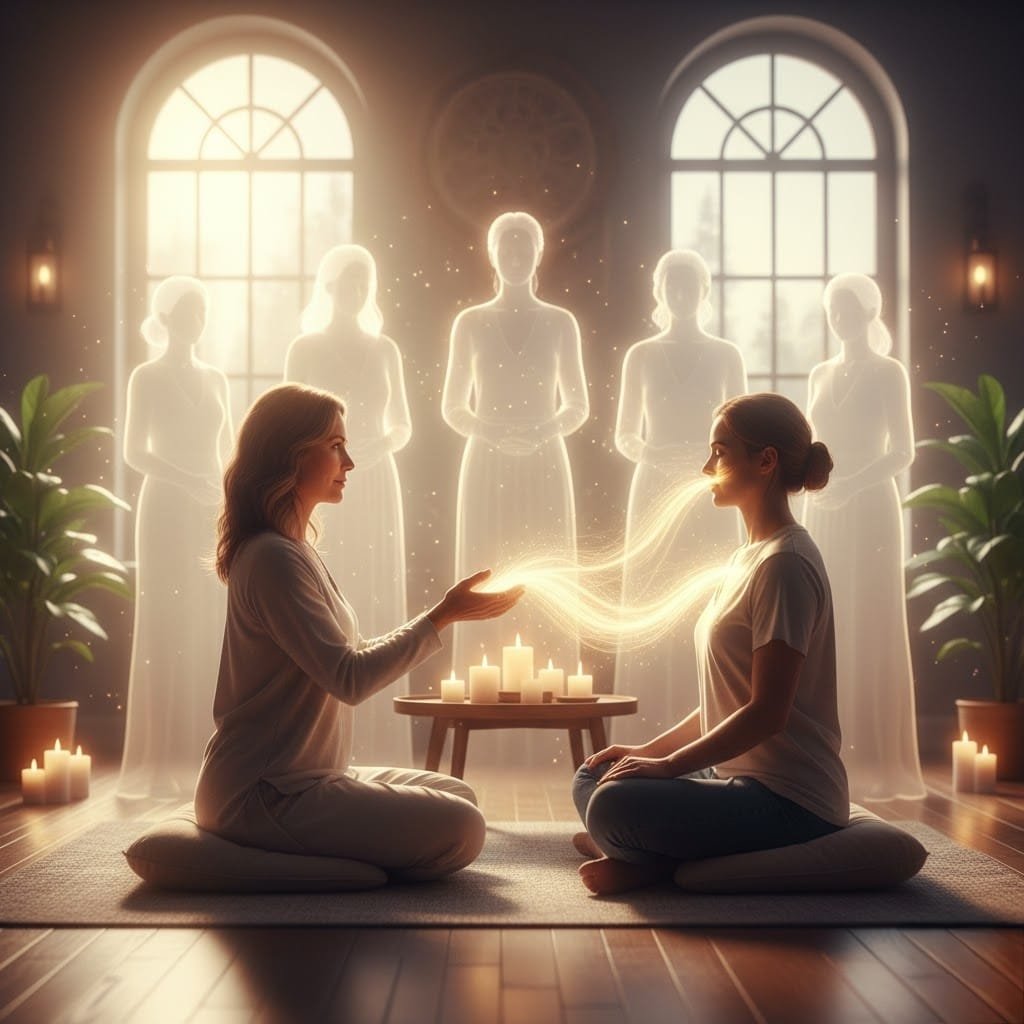
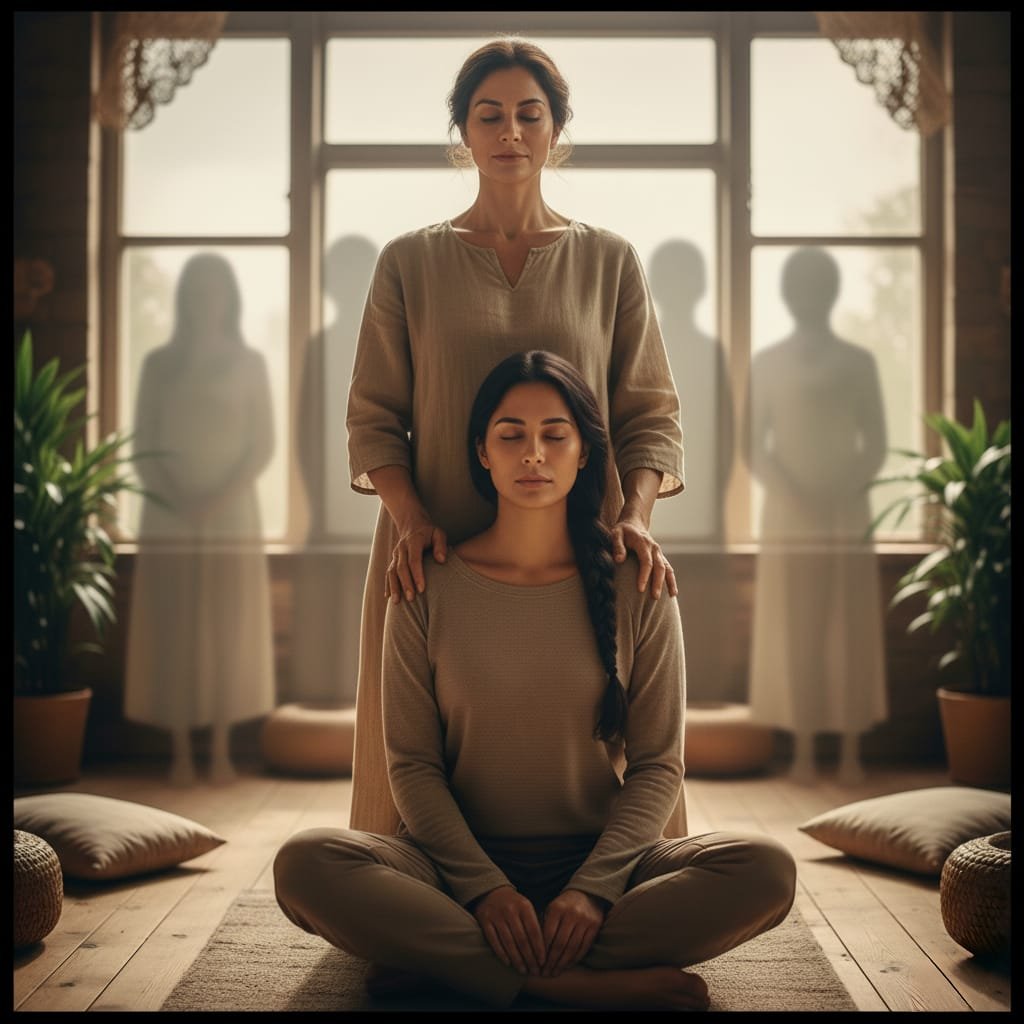
As a healer, I’ve come to understand something that took years to put into words: not all our pain begins with us. Some of it lives in our bones, our blood, our breath—passed down quietly, like a family heirloom wrapped in silence.
This blog isn’t just about healing. It’s a story. My story. A reflection etched in quiet tears, in half-remembered dreams, in the warmth of hands I’ve never held but somehow know.
Ancestral healing, to me, isn’t a technique or a trend. It’s a remembrance. A return. A gentle turning toward the unseen threads that hold us together across time. It’s about listening to what wasn’t said, feeling what was never grieved, and saying “yes” to the love that survived it all.
I’m not writing this as an expert, but as someone who has sat in the dark and found light by whispering their names. Someone who has wept over old photographs and danced in the kitchen with ghosts. Someone who believes—deeply—that healing is possible. For you, for me, for all of us.
What is Ancestral Healing?
Ancestral healing, at its heart, is about relationship. It’s about reconnecting to the threads that link us to the generations that came before. This isn’t just spiritual talk—it’s a lived, embodied experience. We carry their stories, their fears, their unfinished prayers. We inherit more than genetics—we inherit memory, belief, silence, and sometimes, sorrow.
To me, ancestral healing means sitting with those unseen voices. It means honoring their truths without taking on their pain. It’s acknowledging the grandmother who never got to mourn, the uncle whose addiction masked his ache, the ancestors who were enslaved, displaced, or forgotten. It’s an act of love to say: “I see you. I honor you. I will not carry what you could not heal.”
This work is not about blame—it’s about grace. It’s a homecoming. A way back to wholeness.
My Path as a Healer: Meeting My Own Lineage
My story didn’t begin with clarity. It started with confusion. With a heaviness in my chest that had no name. With sadness that didn’t quite belong to me, but clung like a second skin.
One day, in stillness, I placed my hands over my heart and breathed. That’s when I felt her. My grandmother. Not in words—but in presence. She arrived like warmth, like the smell of rising dough, like grief too old to be spoken.
I saw her. Alone at a table. And I wept—not just for her, but for the generations of silence she represented.
That was the beginning.
I uncovered old photos, faded letters, half-told stories. I visited their graves. I cried with them. And slowly, I began to see patterns. Generations of silence. Of women who swallowed grief. Of men who never cried. I began to make space for their voices, and in doing so, I began to hear my own more clearly.
The Science Behind Ancestral Memory
Even science is beginning to echo what many ancient cultures have always known: trauma doesn’t stop with one person. It travels.
Epigenetics shows us that trauma can actually alter the way our genes express themselves—and those changes can be passed down. Imagine that. Your body might be responding to stress that isn’t even yours, but your grandmother’s, or her father’s.
This understanding invites so much compassion. When we realize we’re not just reacting to our own lives, but carrying echoes from before, we soften. We get curious instead of critical. We find grace where there was once shame. And we begin to heal—not just for ourselves, but for our whole line.
Common Ancestral Wounds
Every family has stories. Some are told. Many are not.
In my work, I often encounter wounds that echo across time:
The mother who was never mothered, and so struggled to love. The father hardened by war, passing down vigilance instead of tenderness. The line of women whose voices were silenced—who now tremble through your throat, asking to be heard.
These wounds can show up as anxiety, self-sabotage, or a quiet feeling that something’s off. Recognizing them isn’t about blaming the past—it’s about freeing the future.
The Process of Ancestral Healing
If you’re wondering how to begin—maybe you already have. Maybe something stirred in your chest just reading these words. That’s where it starts. With a pause. A breath. A whisper you can’t quite explain.
This process isn’t rigid. It’s sacred. It unfolds in its own way, in its own time. But here’s how I often guide it:
- Acknowledgment: Say their names. Light a candle. Speak aloud: “I see you.” Even if you don’t know their names, your heart knows.
- Listening: Let your dreams speak. Watch what repeats—a symbol, a memory you never lived. That might be them.
- Ritual and Release: Create space. An altar. A journal. A walk in nature. Use it to express, to honor, to let go.
- Support: You don’t have to hold this alone. Therapists, healers, elders—we can help you carry the weight and find your way.
- Integration: This is the daily work. The quiet “no more” you whisper when a pattern rises again. Healing takes root in how we live.
Rituals and Practices
Not every ritual needs incense or moonlight. Some of the most powerful are the simplest:
- Saying their names over morning tea.
- Cooking your grandmother’s dish with your hands in the dough.
- Walking barefoot on land they once knew.
- Writing letters and burning them, letting the smoke carry your words.
What matters is presence. Intention. Love. Even small acts, done with heart, can open doors between worlds.
Stories from the Healing Room
I remember a client who always felt hunted by fear. Her life was safe, she said. But her body didn’t believe that.
Through our work, she connected with an ancestor—a woman who hid in silence during a war. That fear never left the family. When we honored her story, wept for her courage, and released her memory with ceremony, something shifted. My client said, “It’s the first time I feel like the fear belongs to someone else—not me.”
Another man, strong and stoic, struggled with money. No matter what he did, it slipped through his hands. We traced it back to a great-grandfather who lost everything through betrayal. That trauma whispered scarcity through the generations. We broke the silence, and the flow returned.
Breaking the Silence
Silence is a kind of survival. Our ancestors didn’t always have the luxury of speaking. But we do.
To break the silence is an act of reverence. To ask the hard questions. To cry the tears they couldn’t. To say: “I want to know.”
It won’t always be easy. Some stories stay incomplete. But your curiosity is healing. Your willingness to feel is medicine.
Healing Forward: For Our Children and The World
The healing we do now matters more than we know. Every time we pause, reflect, and say “this ends with me,” we clear the path for those who come next.
Ancestral healing isn’t just personal—it’s collective. Our world aches with old wounds. Colonization, slavery, war, migration—these are not just history. They live in our systems, in our cells.
Imagine if more of us turned inward, healed backward, and moved forward with clarity. That’s how we change the world.
You Are the Dream of Your Ancestors
This truth never fails to bring me to tears: you are what they dreamed of.
Even in their darkest nights, when the world gave them nothing, they hoped. Maybe not for themselves, but for someone down the line. For you.
You are their answered prayer. Their whisper carried by wind. Their “someday.”
When you heal, they feel it. When you laugh, they remember joy. When you speak their names with tenderness, they gather around you in quiet celebration.
You are not here by accident. You’re part of something vast, sacred, and wildly beautiful.
Advanced Practices and Modalities
Once we begin ancestral healing, we often find ourselves drawn deeper. The surface is just the beginning.
I remember my first family constellation session. As people stood in the roles of my ancestors, something ancient stirred in my chest. A stranger looked into my eyes as my great-grandfather, and I wept. It was as if I had been seen by someone I never met, but always knew.
These modalities aren’t just tools. They are invitations:
- Family Constellations: A powerful therapeutic approach where participants represent family members in physical space, revealing hidden dynamics and allowing healing movements to unfold.
- Shamanic Journeying: Guided by drum or rhythm, we enter altered states to connect with ancestor spirits and retrieve messages.
- Plant Medicine Ceremonies: In sacred traditions, plant teachers like Ayahuasca or Iboga bring ancestral memory and insight. These paths require deep respect and guidance.
- Past Life Regression: While not directly ancestral, some wounds are carried across lifetimes and interwoven with our family lines.
These paths deepen our ability to listen, witness, and transform.
Cultural Context and Honoring Lineage
In today’s interconnected world, we have access to many traditions—but access is not ownership.
As a healer, I’ve learned the importance of honoring where these practices come from. I was once drawn to an African ritual not from my lineage. Instead of copying it, I reached out to someone rooted in that tradition. What unfolded was connection, humility, and respect.
If your roots feel distant or lost, that’s okay. Seek them. Even if history severed the connection, the ancestors remember. Sometimes healing starts with the question: “Where do I come from?”
Practice with reverence. With permission. With presence.
Collective Ancestral Healing
Our healing isn’t isolated. We are part of a greater web.
I’ve sat in circles where descendants of colonizers wept beside descendants of the colonized. I’ve seen women reclaim their grandmothers’ voices. I’ve watched Indigenous youth dance their history back into their bones.
This is collective ancestral healing.
It happens when we gather. When we speak truth. When we hold grief together. When we stop pretending that trauma is only personal. It is societal. Cultural. Global.
We heal not just for our families—but for justice. For remembrance. For repair.
My Continued Journey
You might think that being a healer means I’ve arrived somewhere. The truth? I’m always arriving.
Just last year, I learned the name of a great-great-grandmother I’d never known. I whispered it to the earth. I wept. That night, I dreamt of her, humming a song I’d never heard but somehow recognized.
The more I heal, the more I remember. The more I listen, the more I’m humbled. Healing isn’t linear. It spirals. And with each spiral, I find more love waiting underneath.
This path isn’t about perfection. It’s about presence. And heart.
The Invitation to You
Dear one,
You don’t need to be a healer to do this work. You just need to be willing. Willing to listen. To wonder. To remember.
Start small. Light a candle. Trace your fingers over an old photo. Ask the question that’s lived in your bones for too long.
Maybe your ancestors are waiting in a dream. In a melody. In a scent that makes you pause.
Maybe they’re the reason your heart beats the way it does.
You are not alone. You never were. You never will be.
Closing Words: A Circle Unbroken
We’ve come full circle, but the journey never really ends. It spirals, deeper each time.
Every act of remembrance is love. Every tear shed waters something sacred inside you.
Your healing blesses the past. Nourishes the present. Sanctifies the future.
So light your candle. Call their names. Speak the truth. Rest in their arms.
You are the living altar. You are the answered prayer. You are the circle, unbroken.
With love, remembrance, and quiet awe,
Your fellow traveler and healer on this sacred path